

Sinking or uneven pavers, lifted and relaid
When pavers sink, rock or pull apart, the pavers themselves are rarely the problem. Something under them moved: the base, the sand or the edge. The fix is to lift that section, rebuild what failed and lay the same pavers back.
Send photos of the low spot and the edge of the patio. We repair patios, walks, driveways and pool decks, including ones we did not build.
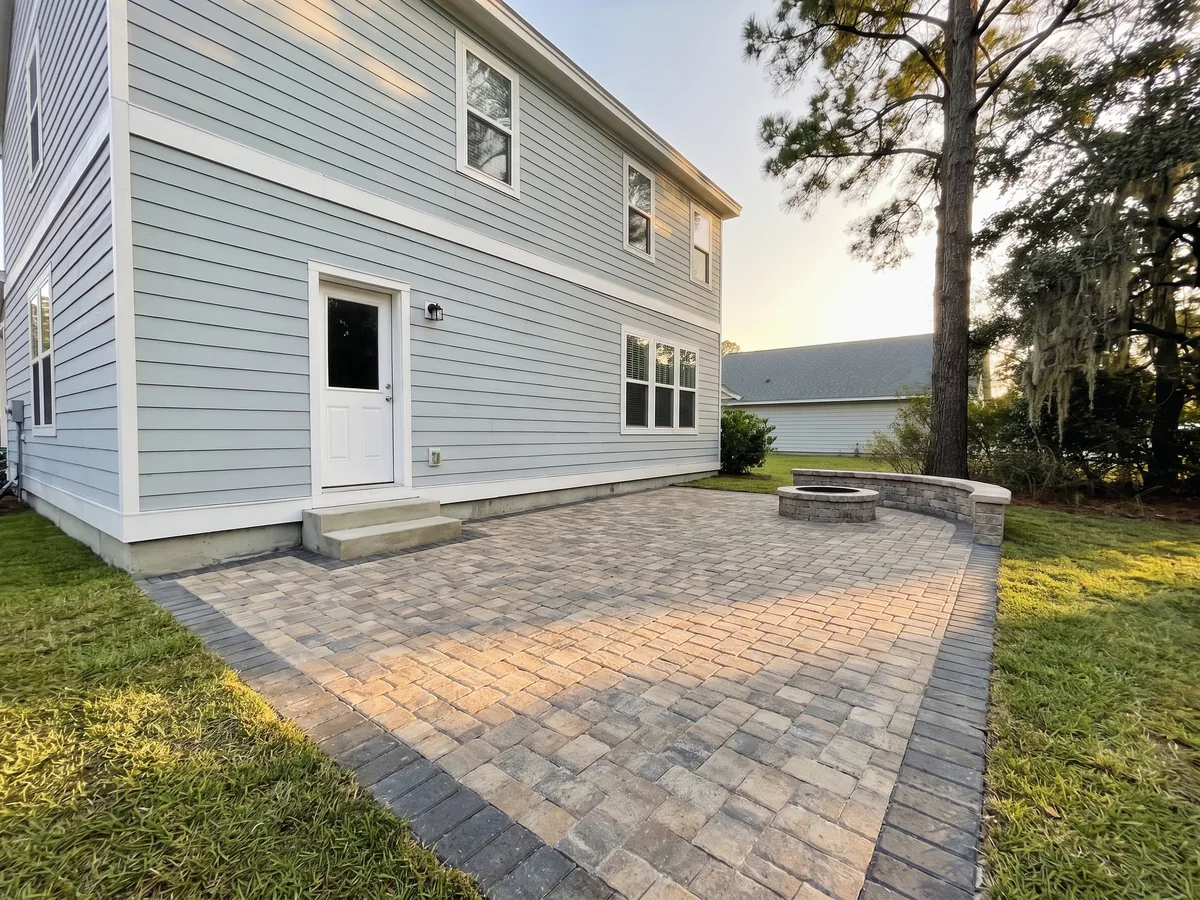
- We fix
- Sunken spots, rocking pavers, open joints, loose edges
- How
- Lift the section, rebuild the base, relay the same pavers
- Works on
- Patios, walks, driveways and pool decks, ours or anyone’s
Something under the pavers moved.
The paver industry’s own body, the Concrete Masonry & Hardscapes Association (formerly ICPI), lists the causes of low spots plainly: the soil or the gravel base settled, often because it was not compacted well; the base or soil sits in water; or the sand under or between the pavers washed out. A loose edge restraint lets the pavers spread apart.
Its installation guide calls for at least 4 inches of compacted base under a patio or walk on well-drained soil, and at least 6 inches under a residential driveway. The bedding sand on top is about an inch, and it is never supposed to level a bad base: the unevenness shows through. A patio built on a thin base, on sand alone, or with soil as its edge is the one that moves.
- Patio or walk base
- At least 4 in. of compacted gravel on well-drained soil
- Driveway base
- At least 6 in.
- Bedding sand
- About 1 in., never used to level the base
- Edges
- A real edge restraint; soil backfill does not count
Lift, rebuild, relay.
We take up the pavers over the low area and stack them. The low spot is filled with base material and compacted, not topped with extra sand. Then the bedding layer goes back, the same pavers go down in the same pattern, the joints are filled and the section is compacted. The pavers you have go back in, so the repair matches.
If the edge let go, the restraint is replaced or re-anchored, because a loose edge lets the whole field spread. If water sitting under the pavers caused it, the repair includes where that water goes, or the low spot comes back.
Open joints, weeds and ants
Joint sand that has dropped more than half an inch should be topped up, the industry guidance says. Pressure washing pulls joint sand out, so joints get refilled after a cleaning.
Weeds grow from seed that blows into the joints, not up through the base, so a weedy patio is a joint problem, not a failed patio. A sealer can keep seeds and ants out of the joints. Belgard advises waiting at least 30 days before sealing new pavers.
Technical guidance checked in October 2026: CMHA PAV-TEC-002, base and bedding · CMHA PAV-TEC-003, edge restraints · CMHA PAV-TEC-006, maintenance and repair · Belgard maintenance guide.
When a repair is enough
A few low spots, a sunken area by a downspout, a loose edge or open joints: those are repairs. When most of the surface has moved, or there was never a real base under it, lifting it section by section can cost more than rebuilding it once. In that case we price both, so you can compare.
Repairs are priced by the area we lift, how much base has to go back, and what the edge needs. Photos of the low spot and a rough size are enough for a first number.
What people ask about sinking pavers.
Why is my paver patio sinking?
Something under it moved. The paver industry’s guidance lists the usual causes: the soil or base settled, often from poor compaction; the base sits in water; or sand washed out from under or between the pavers. A loose edge lets the pavers spread apart.
Can sunken pavers be fixed without replacing them?
Yes. The section is lifted, the base under it is rebuilt and compacted, and the same pavers are laid back in the same pattern.
Can you just add sand under the low pavers?
No. Low areas are filled with base material and compacted. Bedding sand is a thin layer about an inch deep, and using it to level a low spot lets the dip show through again.
How do I stop weeds and ants between pavers?
Keep the joints full: top up the joint sand once it drops more than half an inch. Weeds start from seed that blows into the joints, and a sealer can keep seeds and ants out.
Do you repair patios someone else built?
Yes. We repair patios, walks, driveways and pool decks whoever built them. Send photos of the low spot and the edge.
When can I seal new or repaired pavers?
Belgard advises waiting at least 30 days before sealing new pavers. Power washing before sealing pulls joint sand out, so the joints are topped up first.
Send a photo of the low spot.
The sunken area, the edge nearest it and a rough size. We will tell you what we think failed and what the repair involves.