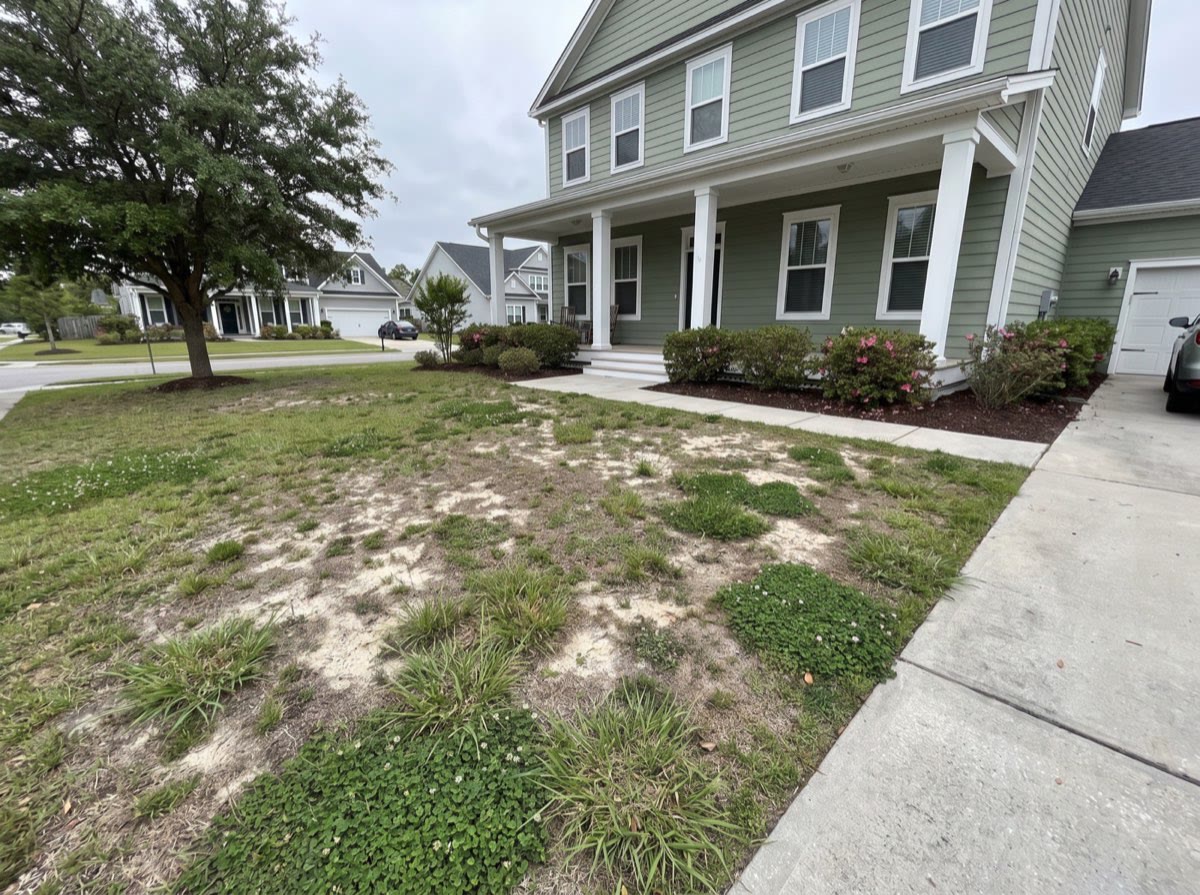
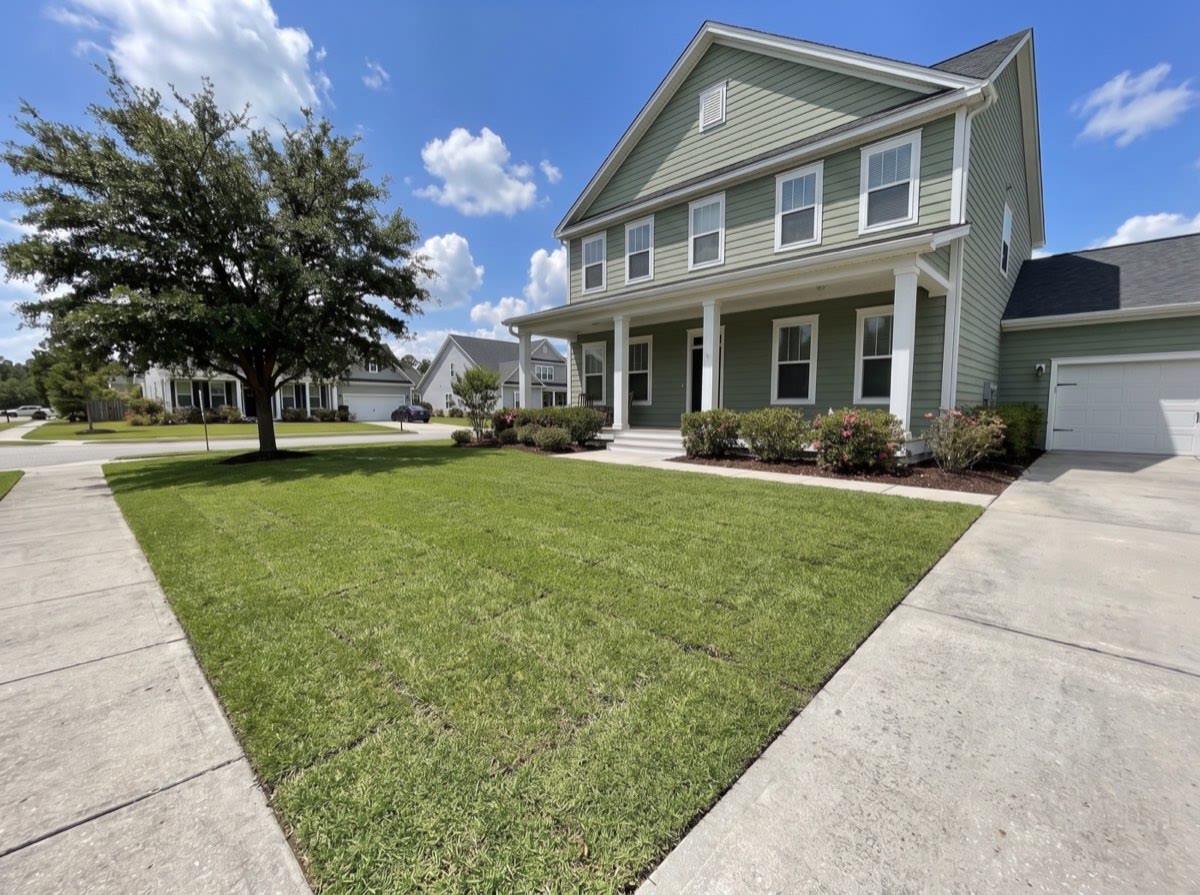
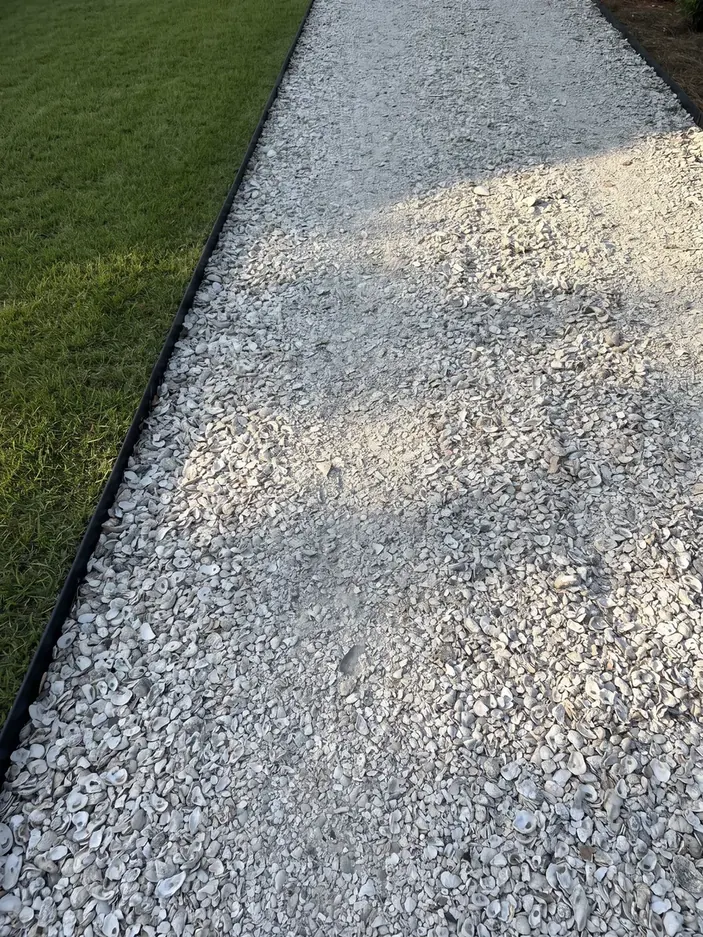
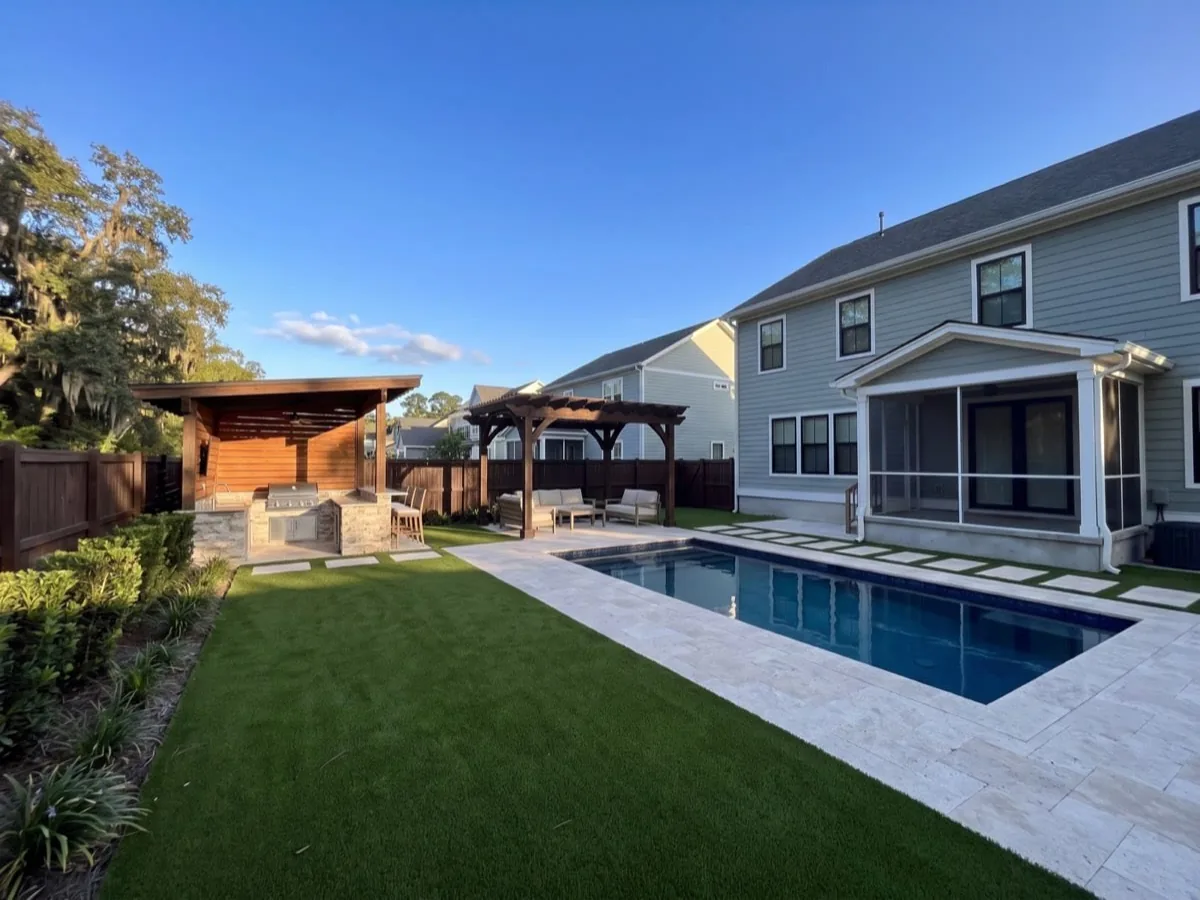
 Before
After

 CarolinaFieldstoneHardscaping & Landscaping
Most of the work we do in Mount Pleasant is on houses younger than the people living in them. Park West, Carolina Park, Belle Hall, Rivertowne. That changes what a lawn needs here, and it is the reason a company that only mows will eventually disappoint you.
Newer subdivisions sit on builder fill. The developer strips the site, brings in fill to raise the grade, then lays a thin skin of topsoil over the top before the sod goes down. It looks like a lawn on closing day. Two summers later the fill underneath has compacted, water sits on it after a storm instead of soaking away, and the grass thins in exactly the low spots you noticed the first winter.
That is a soil problem wearing a lawn problem's clothing. Fertiliser will not fix it. What fixes it is knowing it is there before anyone quotes you, which is why we ask what year the house was built before we price a sod job here.
Most Mount Pleasant builds came with irrigation. That is an advantage and a liability: a head that has drifted out of alignment or a zone that stopped running will kill a patch of centipede quietly over about six weeks. We check the zones before we lay anything new, because sod on a dead zone is money set on fire.
And there is almost always an HOA. Bed lines, mulch color, fence height and material, sometimes even which grass you are allowed. We would rather read the covenant first than build a fence you have to take down.
Mount Pleasant adopted a new zoning code in January 2025, and for fences it is lighter than most people expect. A fence seven feet or lower is exempt from the zoning permit. The exceptions are fences built of brick, stone or concrete, and fences along the street on a corner lot.
A fence seven feet or higher may need a building permit. The finished side has to face out. The town does not allow fencing in a buffer, an easement or the right-of-way, and its FAQ still asks for site plan approval. So we find those lines on the plat and confirm with the planning office before any posts go in.
That means the real limits usually come from somewhere else. In a planned neighborhood it is the HOA. In the Old Village it is the historic district: front-yard fences 42 inches or lower, rear fences up to six feet except on corner, harbor-front and marsh-front lots, and chain link, vinyl and aluminum listed as not appropriate.
The Old Village also caps impervious surface, meaning anything rain cannot soak through, at 40 percent of the lot. It does not permit artificial turf.
Patios and driveways. Under the zoning code a new patio or a new driveway needs a zoning permit. Replacing or repairing a driveway you already have does not. A new or longer driveway that crosses an easement or the right-of-way also needs an encroachment permit. Clearing a lot, bringing in fill or regrading needs a permit before the work starts.
Trees. The zoning code counts a tree as protected from eight inches across, and the town’s tree page calls trees of 24 inches or more historic. A tree’s protection zone is one foot of radius for every inch of trunk. Inside it the code prohibits impervious surface and trenching, unless the planning department adjusts the zone after looking at the tree. A 20-inch oak can keep a patio 20 feet back.
Marsh lots. The code sets a vegetated buffer back from the marsh critical line, 20 feet at the least and 35 feet on average. On a lot that was already built on, the buffer has to be established when the house gets a major renovation. Where it applies, no impervious surface goes in it, and no masonry fence or wall.
Rules checked in October 2026 against: Town of Mount Pleasant zoning code, adopted January 14, 2025 · Old Village Historic District Guidelines · Town tree protection page · Town driveway permit FAQ · Town code enforcement. Councils and boards change them, so we confirm the current text for your address before quoting.
Before
After
The zoning code exempts a fence seven feet or lower from the zoning permit, unless it is brick, stone or concrete, or runs along the street on a corner lot. A fence seven feet or higher may need a building permit.
Fencing is not allowed in a buffer, an easement or the right-of-way, and the town’s FAQ still asks for site plan approval, so we call the planning office first. Your HOA, or the Old Village historic district, usually sets height and material.
It depends on the trunk. Mount Pleasant sets a tree protection zone of one foot of radius for every inch of trunk diameter, and its code prohibits impervious surface and trenching inside that zone. The planning department can adjust the zone after looking at the tree. We measure the trunk and mark the zone before we draw the patio.
Yes, and we would rather see them before quoting. Fence height and material are the two that catch people out in Park West and Carolina Park, and finding out after the posts are set is an expensive conversation.
That is almost always compacted builder fill rather than anything wrong with the grass. Sod over it and you will have the same puddle with a newer lawn on top. We grade it first or we tell you it needs more than we are quoting.
We test and adjust the zones as part of any sod or turf job, because a dead zone will take out new grass before it roots. Full system repairs and installs we quote separately.
You get a real figure the same day, and we will tell you what is driving it. If your property needs more than we quoted, you hear that before anyone starts, not after.
We also work in North Charleston · James Island · West Ashley · Johns Island · Summerville · Daniel Island · Isle of Palms · Sullivan’s Island · Folly Beach · Kiawah Island · Downtown Charleston.