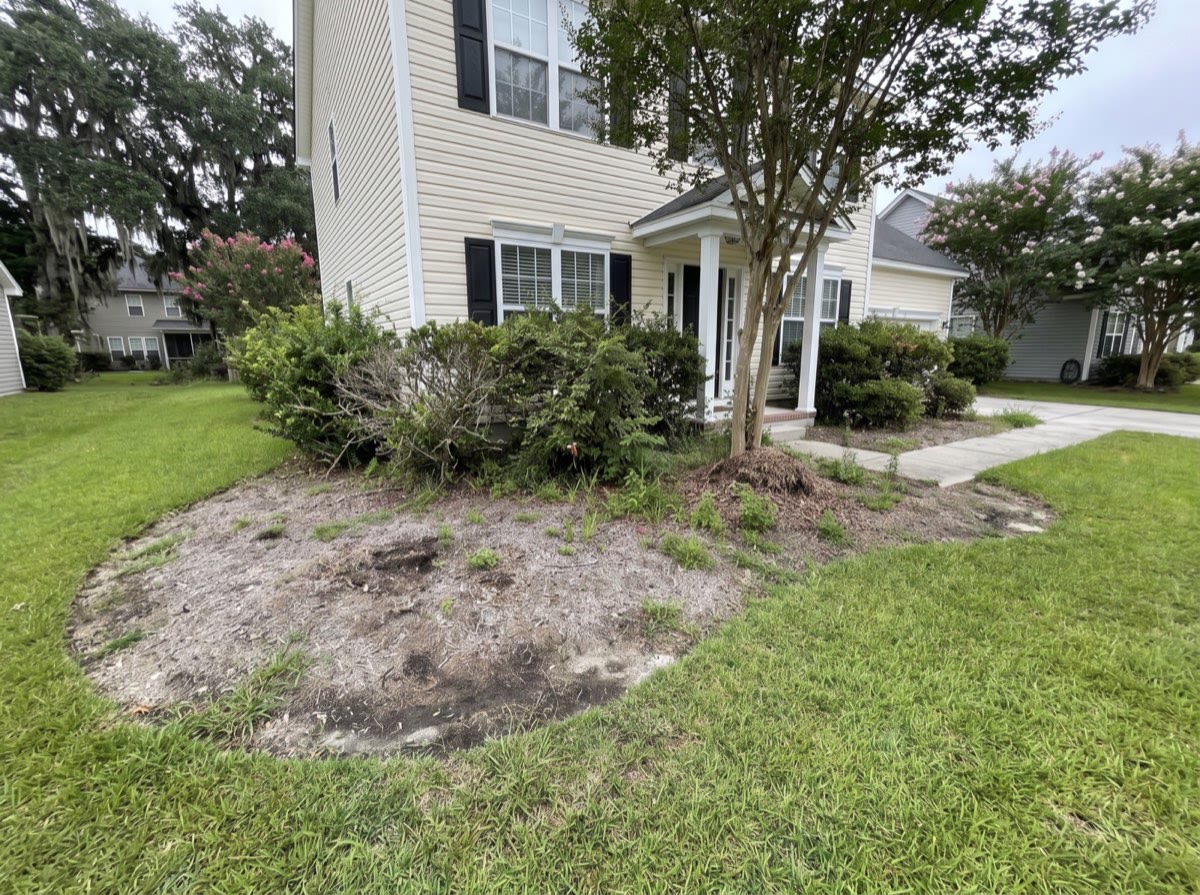
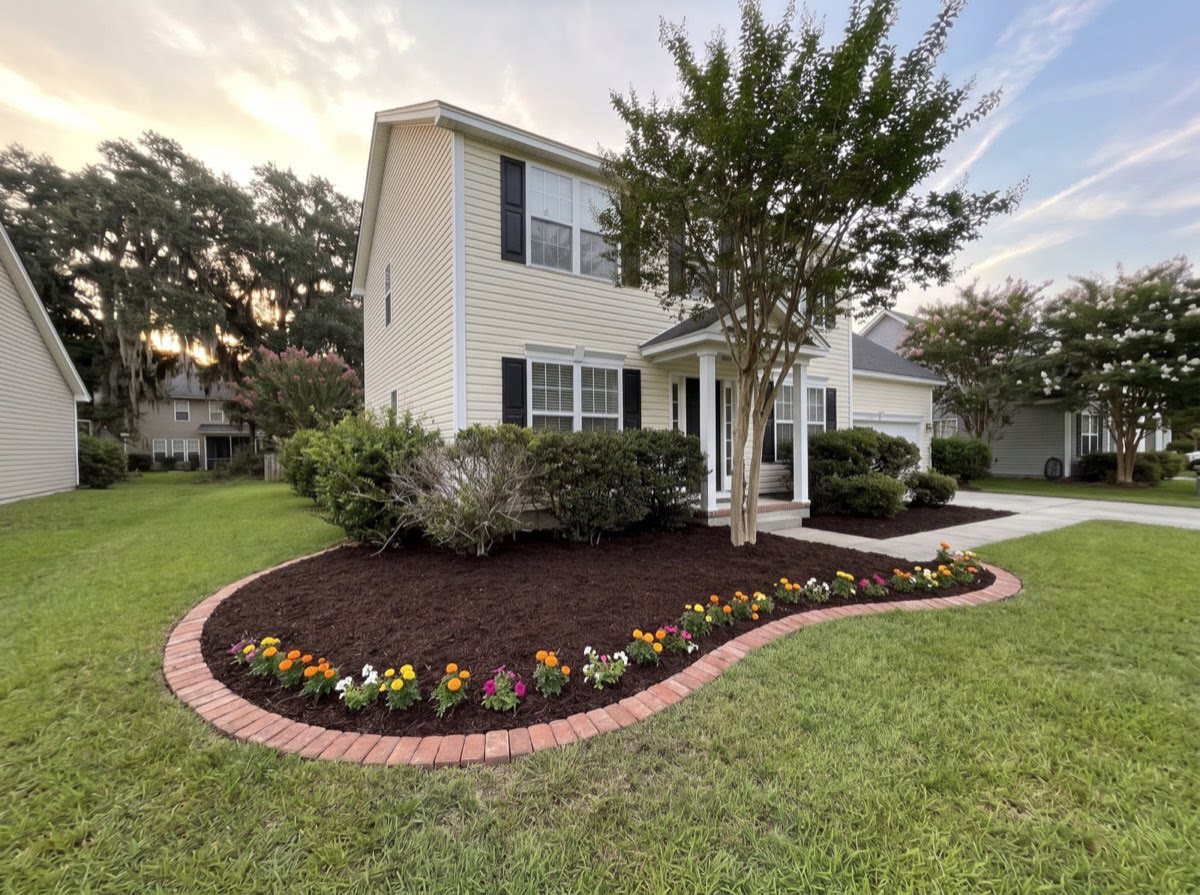
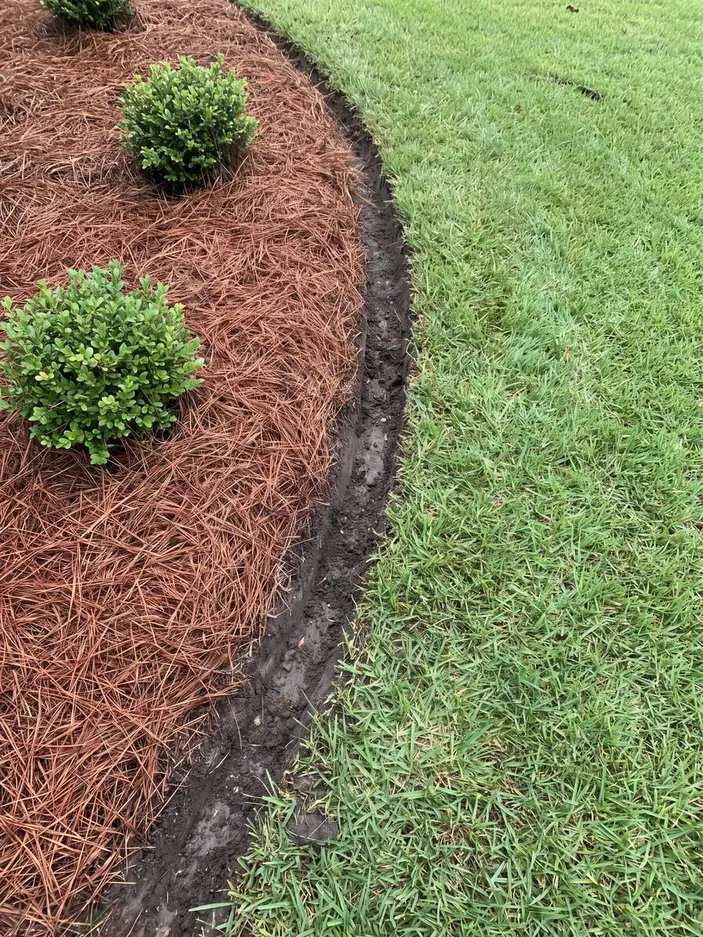
 Before
After

 CarolinaFieldstoneHardscaping & Landscaping
West Ashley is really two places, and which one you live in changes the job completely. Nobody quoting from a satellite photo can tell them apart, which is why the number they give you is a guess.
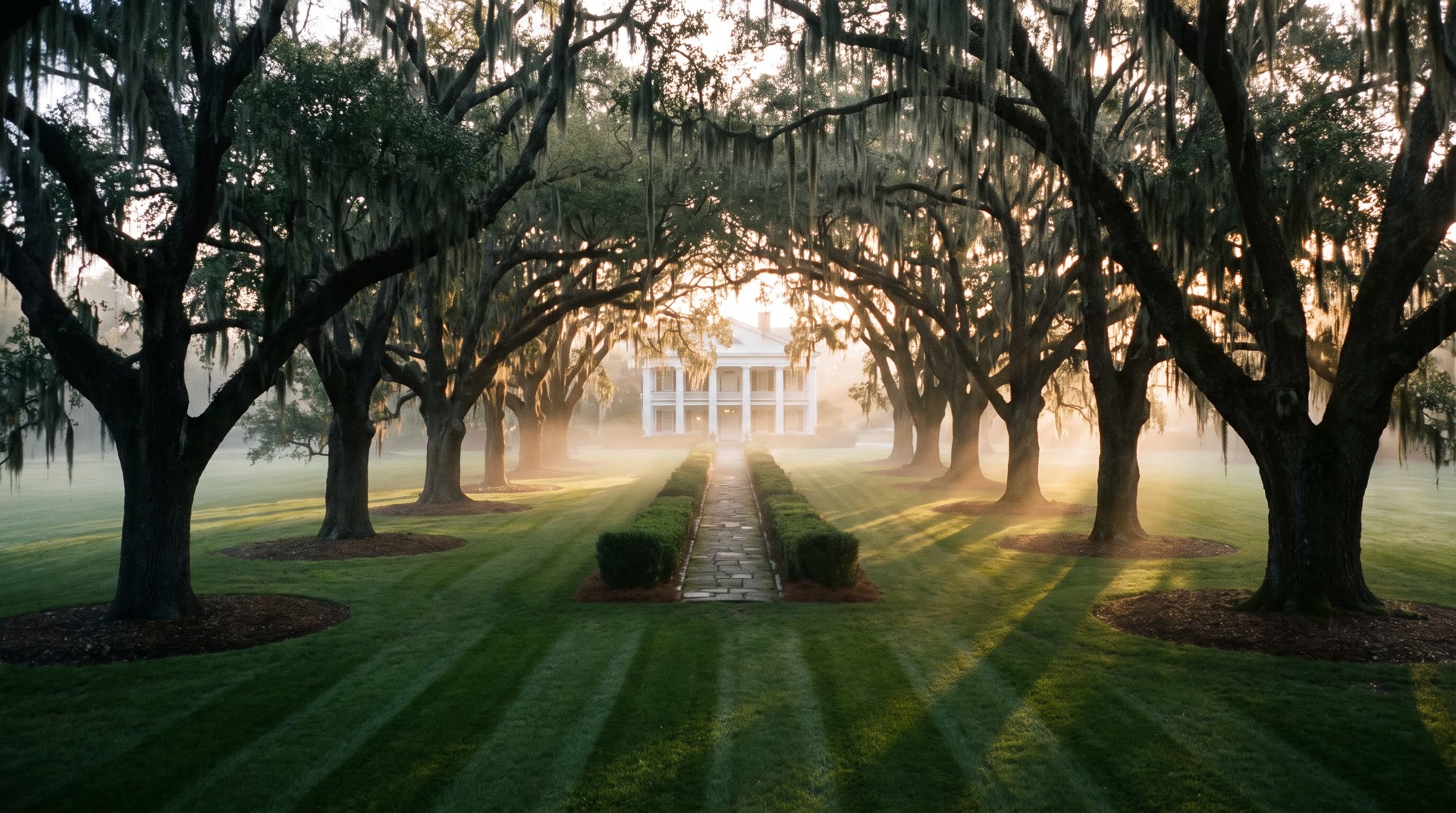
The older half is Avondale, Byrnes Downs, South Windermere and the streets around them. Houses from the forties and fifties on generous lots with soil that has been settling for seventy years. That soil is genuinely good. What it comes with is a mature live oak canopy that puts most of the backyard in shade for most of the day, and root systems that were there long before the fence was.
The newer half sits on builder fill, same as much of Mount Pleasant. Thin topsoil over compacted fill, drainage that works until it does not.
So the first question on a West Ashley lawn is which of those two you have, because it changes the grass, the prep and the price. On old soil under canopy the honest conversation is often about how much lawn you should keep at all. On fill it is about what has to come out before anything goes down.
The big lots cut both ways. More grass to maintain, but the density works in your favor: if we already cut three houses on your street, your visit costs less to serve, and that shows up in what we quote.
West Ashley is not a town. Part of it is inside the City of Charleston and part is unincorporated Charleston County, and the two have different rules. The city has an online lookup that says which one an address is in. That is the first thing we check.
Fences. In the city, a fence or free-standing wall on a residential lot outside the historic review districts tops out at six feet. The permit package includes a plat showing the property lines, the house and any easements, plus HOA approval where there is one. In the county areas a fence under six feet needs no zoning permit, unless it is brick, stone or concrete. A full six-foot fence does need one.
A fence that crosses a city drainage easement needs an encroachment application first, and the city says that step can take up to four weeks. So we look for the easement on the plat before we give you a date.
Drainage is the real West Ashley issue. The city has drawn special protection areas around known flooding, and here they cover the Church Creek basin and much of the rest of West Ashley.
Inside one, a single-family home that adds 500 square feet or more of impervious surface, meaning anything rain cannot soak through, is no longer exempt from the city’s stormwater standards. A large patio or a wider driveway can cross that line, so we measure the new surface before we draw it.
Driveways. Where a driveway crosses the city right-of-way, the city requires standard broom-finished concrete. Any other material in that strip, pavers included, needs an encroachment agreement first.
Trees. The live oaks matter to a patio as much as to a lawn. In the city a tree 24 inches across or more is a grand tree, pines excluded, and its protective zone allows no digging, fill or impervious surface without the city’s approval. A 24-inch tree needs 12 feet of clearance and a 36-inch tree needs 16. In Avondale or Byrnes Downs that decides where a patio can sit long before the paver color does.
Rules checked in October 2026 against: City of Charleston zoning, Article 3, Table 3.1 · City fence permit FAQ · Stormwater Design Standards Manual, April 2026 · City tree removal information · City right-of-way rules · Charleston County zoning ordinance. Councils and boards change them, so we confirm the current text for your address before quoting.
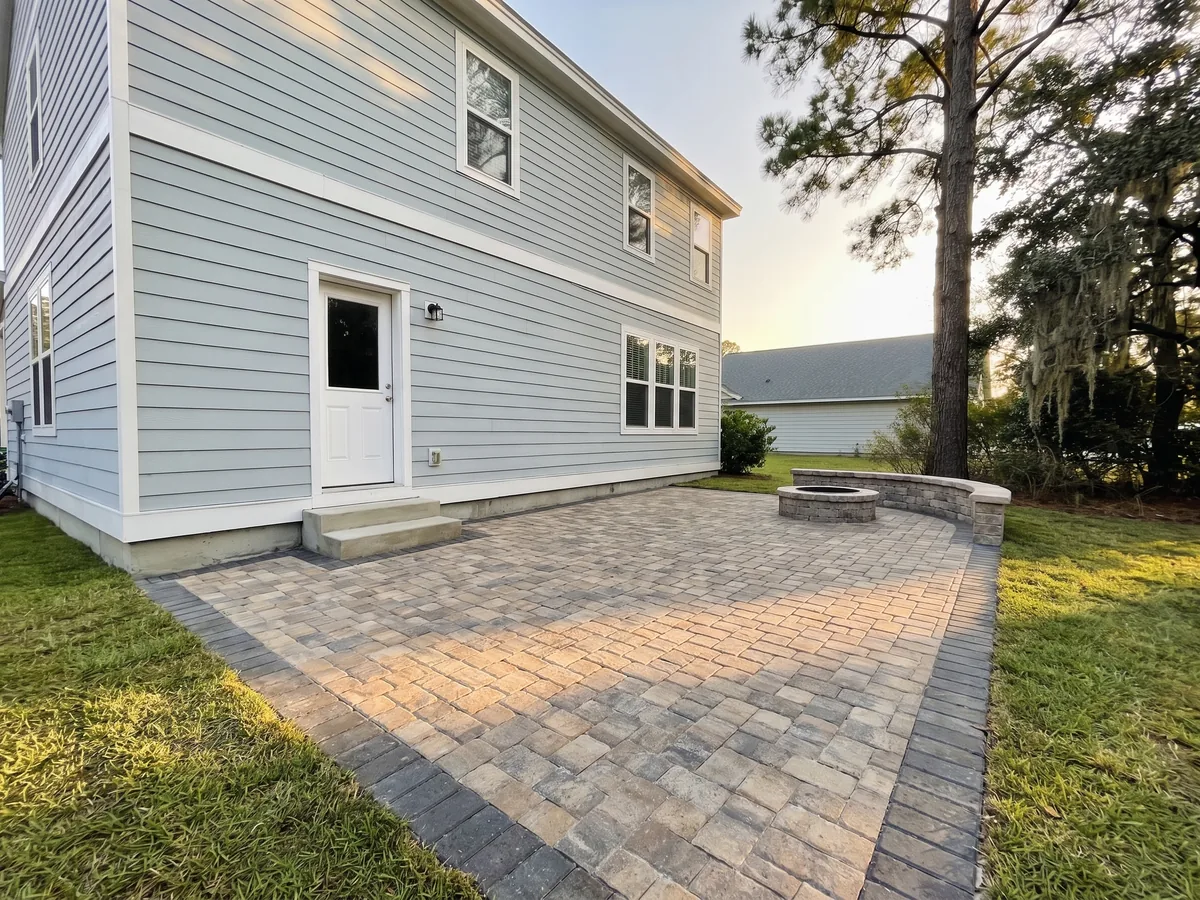
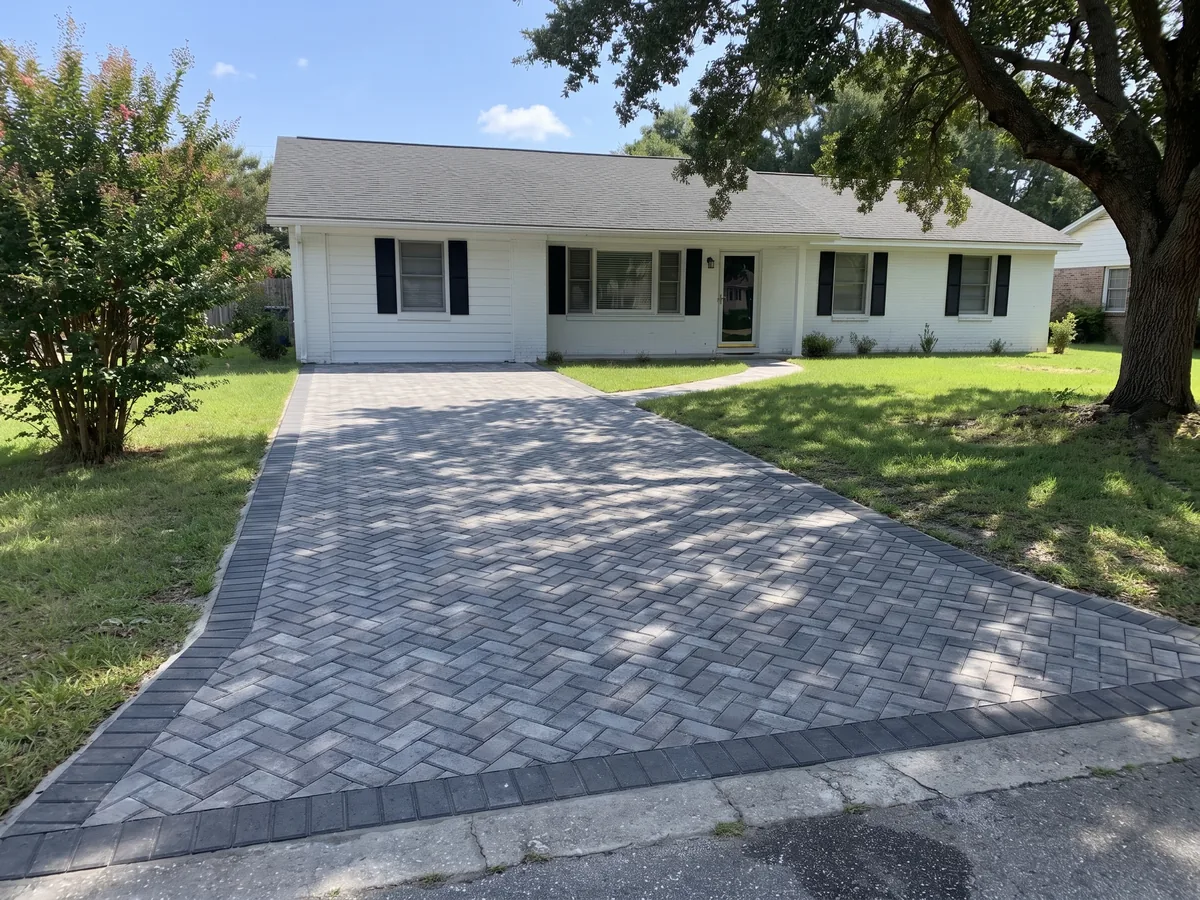
Before
After
Six feet on a residential lot in the City of Charleston, outside the historic review districts. In the unincorporated county areas a fence under six feet needs no zoning permit unless it is brick, stone or concrete, so a full six-foot fence does need one. An HOA can be stricter than either, so we read its rules first.
A single-family project is normally exempt from the city’s stormwater redevelopment standards. The exception is the special protection areas drawn around known flooding, which in West Ashley cover the Church Creek basin and much of the rest of the area. There, adding 500 square feet or more of impervious surface brings those standards into play. We measure the new surface and check the map for your address before quoting.
That is usually the shade line from the canopy rather than two different problems. The bare half is not underfed, it is under-lit. Either the grass changes to something shade tolerant or that section stops being lawn.
Not on a mature live oak, no. Cutting structural roots on a tree that age can kill it, and in some cases the tree is protected. We work around them, raise the mower, or convert that area to bed.
Age is the shortcut. Pre-1970 in the Avondale and Byrnes Downs area is almost always established soil. Anything built in the last thirty years is likely fill. We check on site before quoting anything that goes in the ground.
You get a real figure the same day, and we will tell you what is driving it. If your property needs more than we quoted, you hear that before anyone starts, not after.
We also work in North Charleston · Mount Pleasant · James Island · Johns Island · Summerville · Daniel Island · Isle of Palms · Sullivan’s Island · Folly Beach · Kiawah Island · Downtown Charleston.