

Hardscaping and landscaping in downtown Charleston.
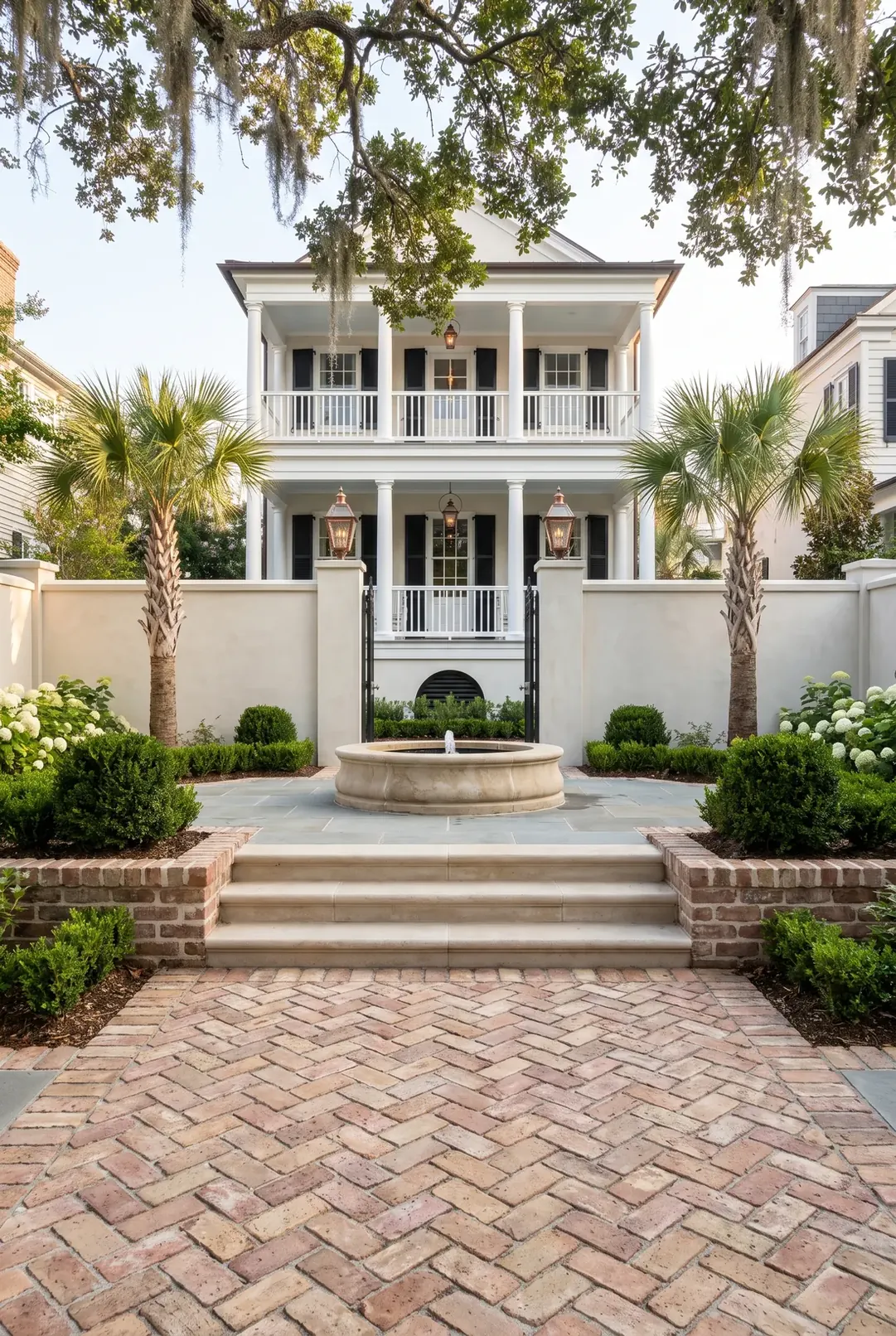
On the peninsula a driveway, a garden wall and a gate are treated as part of the architecture. In the historic districts the Board of Architectural Review counts paving, fences, walls and gates as structures, and it adopted a written hardscape policy in December 2025. A courtyard here starts with that policy, and with the staff who apply it.
- Area
- Charleston peninsula, SC
- Who reviews the work
- Board of Architectural Review, City of Charleston
- You hear back
- The day you call
What the Board of Architectural Review's hardscape policy says
Paving is reviewed like a building. The policy asks for every paving and hardscape material to be shown on the site plan and the choices sent to preservation staff.
It says paving should be kept to what a driveway needs plus a limited amount for recreational use, and that in no case should the whole unbuilt part of a property be paved with impervious surface. Most of this is decided by staff, without a full board hearing, unless the property sits in the top two categories of the City's architectural inventory.
Asphalt and plain concrete are out for driveways. In the historic districts the policy does not allow an asphalt or plain poured concrete residential driveway. Gravel is permitted on a limited basis and no larger than number 7 stone, with an apron to keep it out of the storm drains. Pervious paving is preferred, plantation mix is preferred to gravel, and concrete is not to be stamped to pass for brick or stone.
Walls and fences can go higher here than elsewhere in the city. The zoning ordinance allows a fence or freestanding wall up to seven feet, with piers to eight, on property under the board's jurisdiction. Elsewhere in the city the limit on residential property is six.
On a corner lot nothing between three and fifteen feet tall may stand within fifteen feet of the corner. A fence permit needs a plat showing the property lines, and the board's own application when the address is in its purview.
A grand tree sets the edge of the paving. The City protects any tree 24 inches across or more, pines and sweetgums aside. New impervious surface has to stay twelve feet clear of one, plus a foot for every three inches of trunk over 24, unless the Zoning Administrator approves special construction methods. A 36 inch live oak means sixteen feet. On a downtown lot that can decide where the driveway goes.
Turf has its own line in the policy. Artificial turf in the board's districts has to be installed so it drains, with no visible seams, kept in good order where it can be seen from the street, and approved from a physical sample. Digging in a street or sidewalk needs a permit from the city engineer.
Rules checked in October 2026 against: City of Charleston, BAR Policy Statement for Hardscaping (December 2025) · City of Charleston zoning ordinance (Secs. 54-232, 54-301, 54-327, 54-330, 54-351) · City of Charleston, Board of Architectural Review · City of Charleston, permit questions (fences) · City of Charleston, tree removal information. Boards and councils change them, so we confirm the current text for your address before quoting.
- Fence or wall, BAR districts
- 7 ft, piers to 8 ft
- Gravel size
- No larger than number 7
- Grand tree
- 24 in across and up
- BAR-Small meets
- 2nd and 4th Thursday
What peninsula owners ask first.
Can I have a concrete driveway in the historic district?
Not a plain poured one. The Board of Architectural Review's hardscape policy, adopted in December 2025, does not allow asphalt or plain poured concrete residential driveways in the historic districts. Brick, pavers and plantation mix are the usual routes, and pervious paving is preferred.
How tall can a garden wall or fence be downtown?
Up to seven feet, with piers to eight, on property under the Board of Architectural Review. The design still has to be approved, because the board treats fences, walls and gates as structures, and meeting the policy is not an automatic approval.
Does a courtyard need the full board's approval?
Usually not. The policy says hardscape is reviewed by preservation staff unless the property is Category 1 or 2 in the City's architectural inventory. We put the materials on a site plan and send them to staff before ordering anything.
Tell us the downtown Charleston address.
You get a real figure the same day, and we will tell you what is driving it. If your property needs more than we quoted, you hear that before anyone starts, not after.
What we build in downtown Charleston.
We also work in North Charleston · Mount Pleasant · James Island · West Ashley · Johns Island · Summerville · Daniel Island · Isle of Palms · Sullivan’s Island · Folly Beach · Kiawah Island.