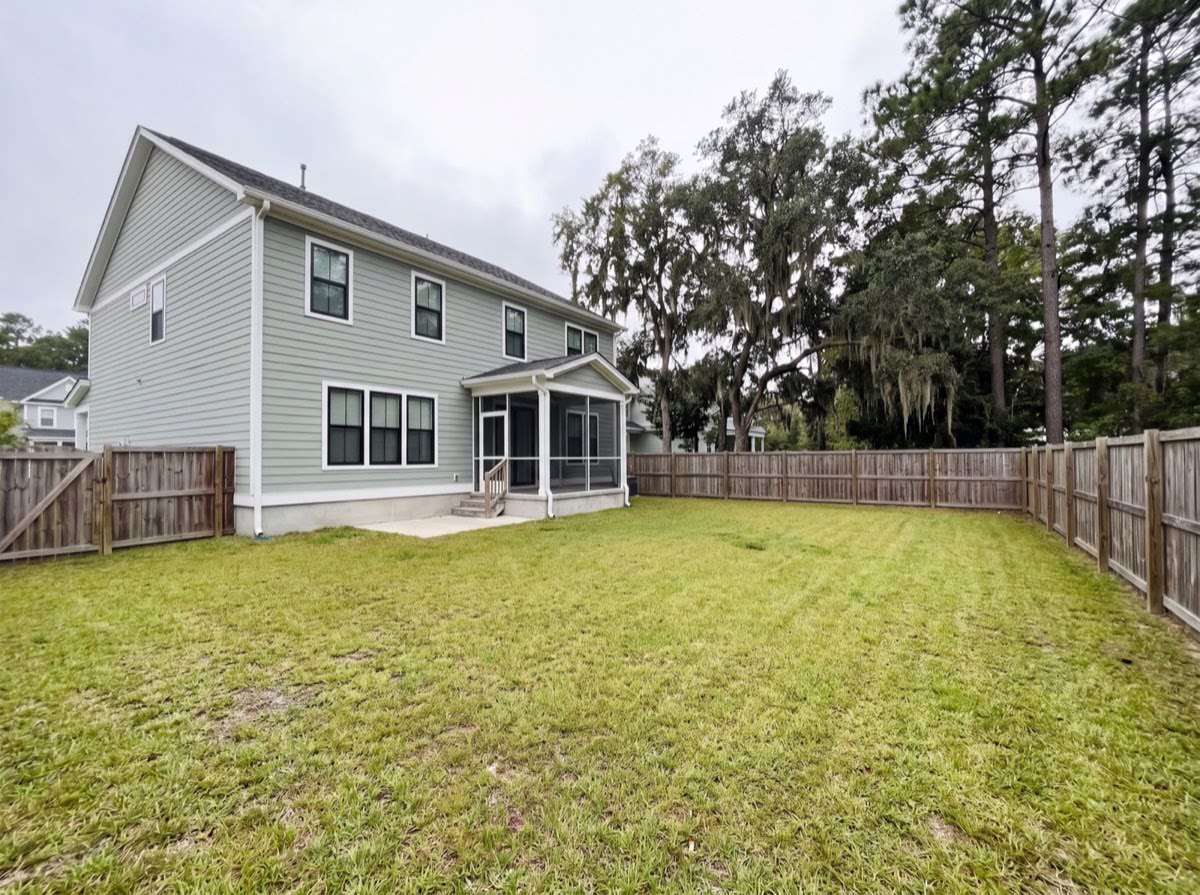
 Before
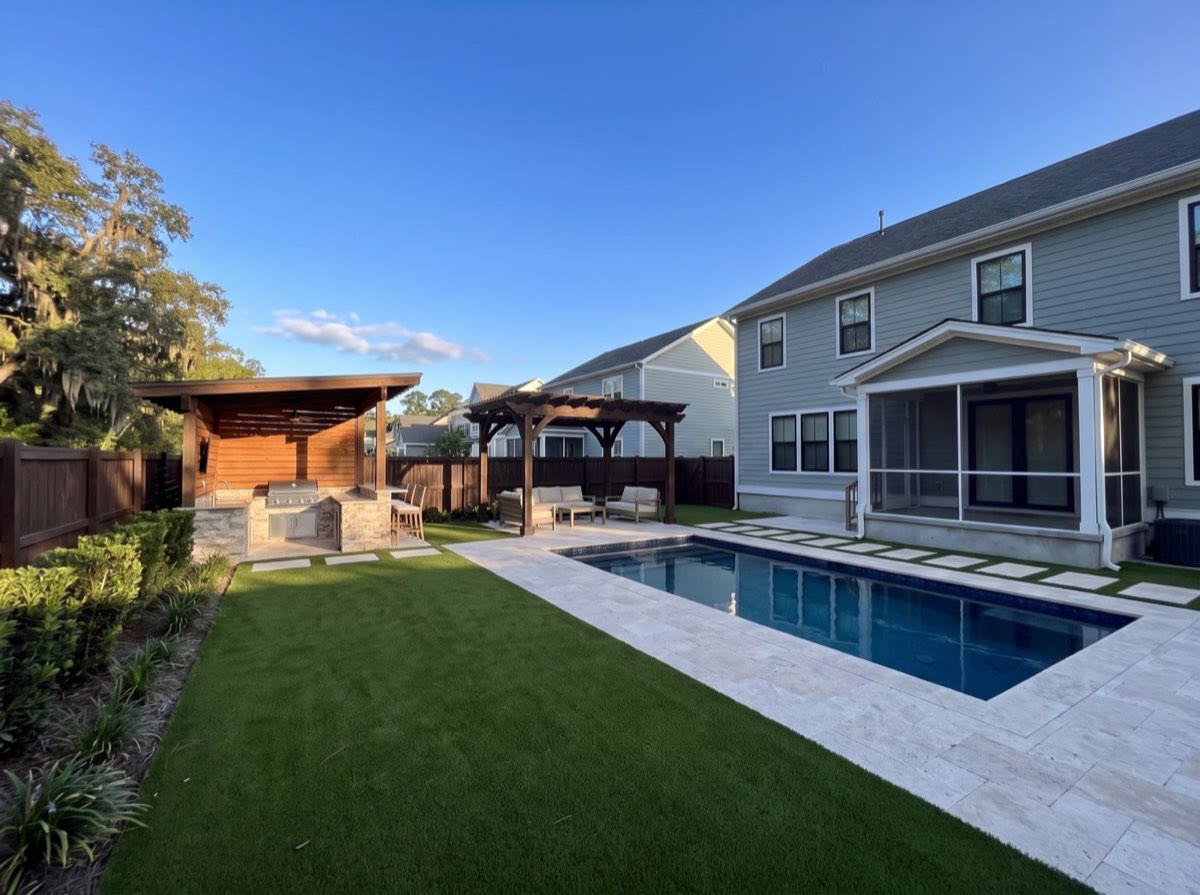
After
Before
After

 CarolinaFieldstoneHardscaping & Landscaping
Green in August, green under the live oaks, green where the dogs run. The base underneath is most of the work and all of the reason the surface stays flat for years.
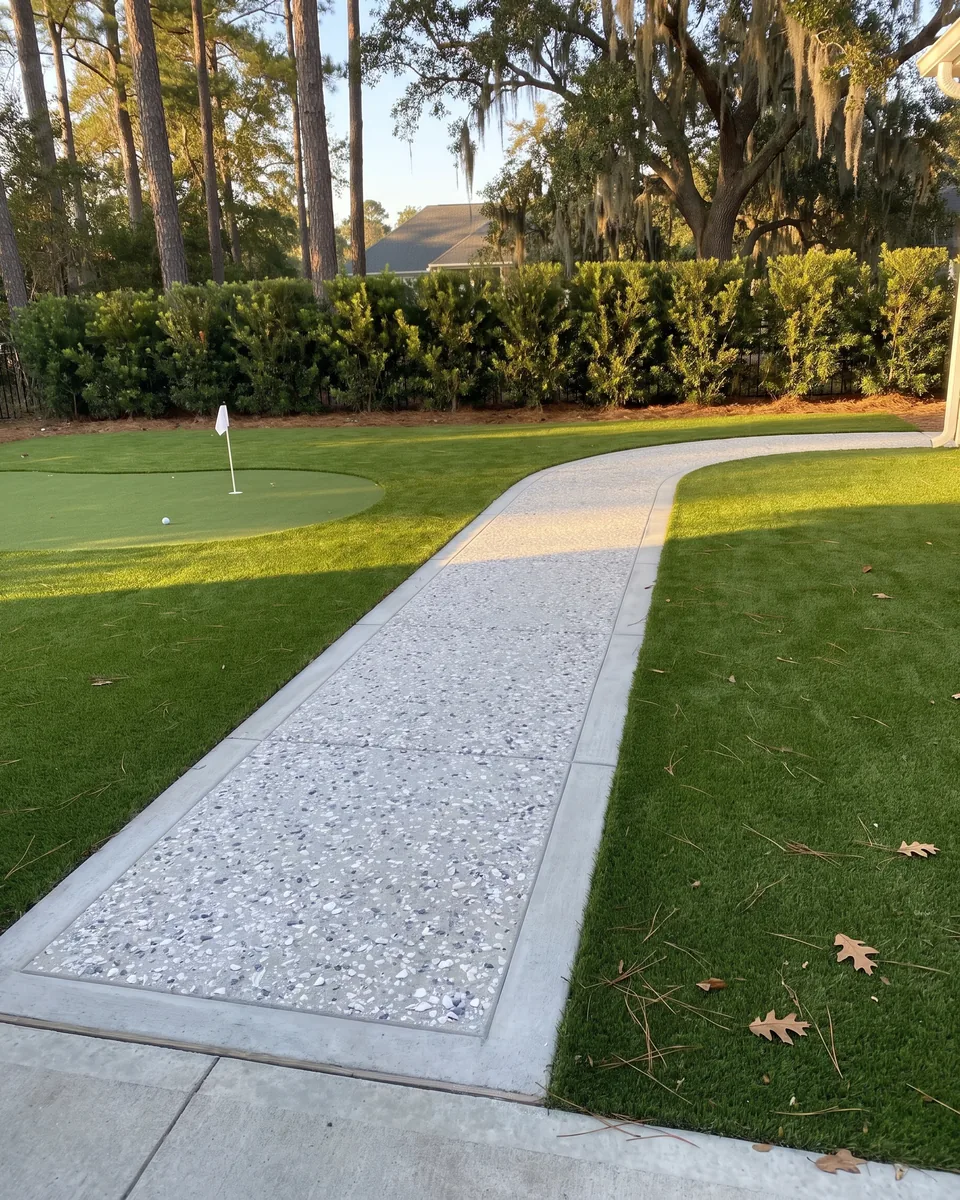
Landscape turf at 60oz, premium 80oz, pet turf with a drainage backing, or a short true pile for a putting surface. The ground work gets quoted separately from the turf, because that is where the money goes.
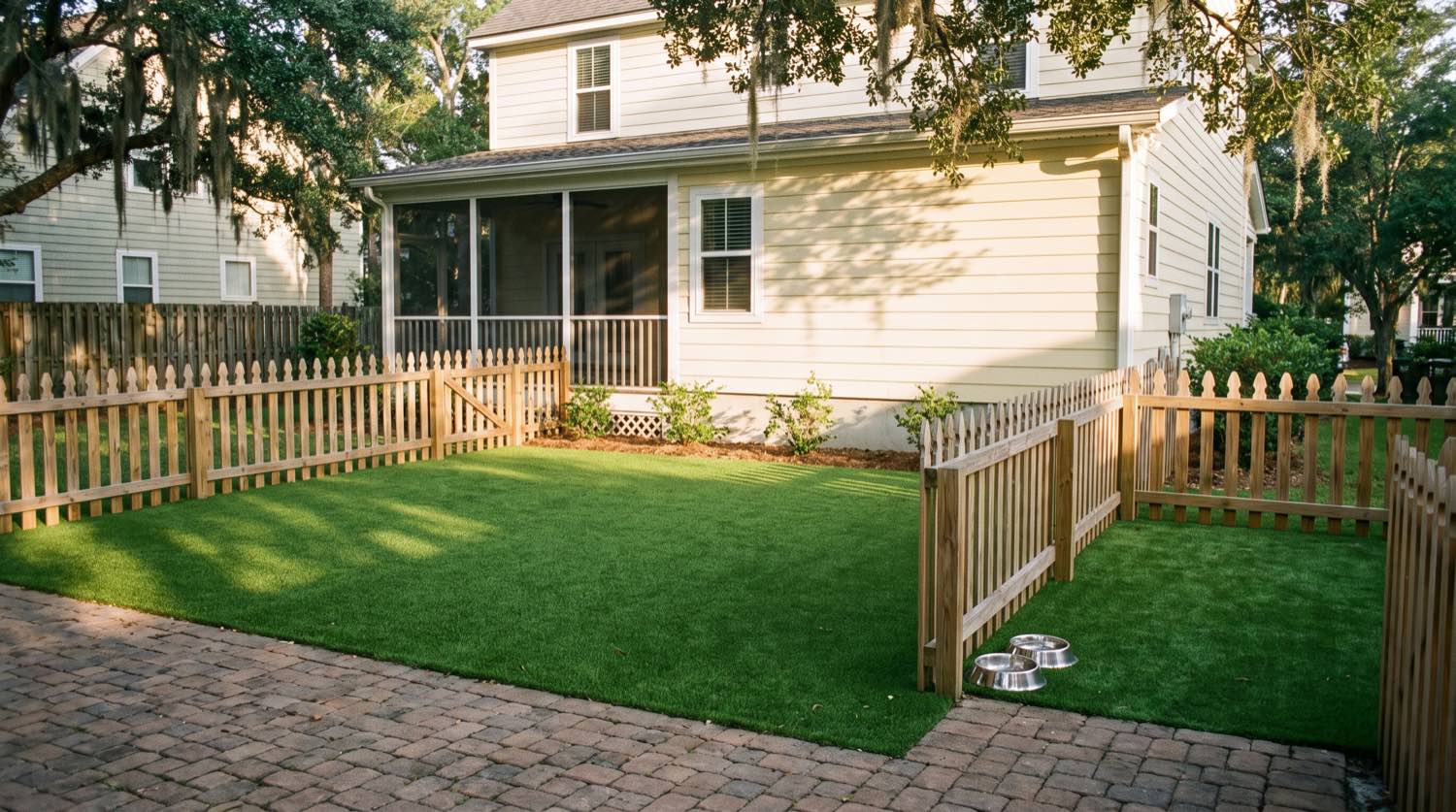
Excavation, crushed stone, weed barrier, infill and edging each appear as a separate line rather than buried inside one rate per square foot.
Turf that fails in Charleston fails at the base and not at the blade. Water has to have somewhere to go, and a surface laid straight onto graded soil will hold it.
Turf costs more than sod on day one and nothing after it. No mowing, no water bill, no brown season and no reseeding the bare patch under the oak every spring.
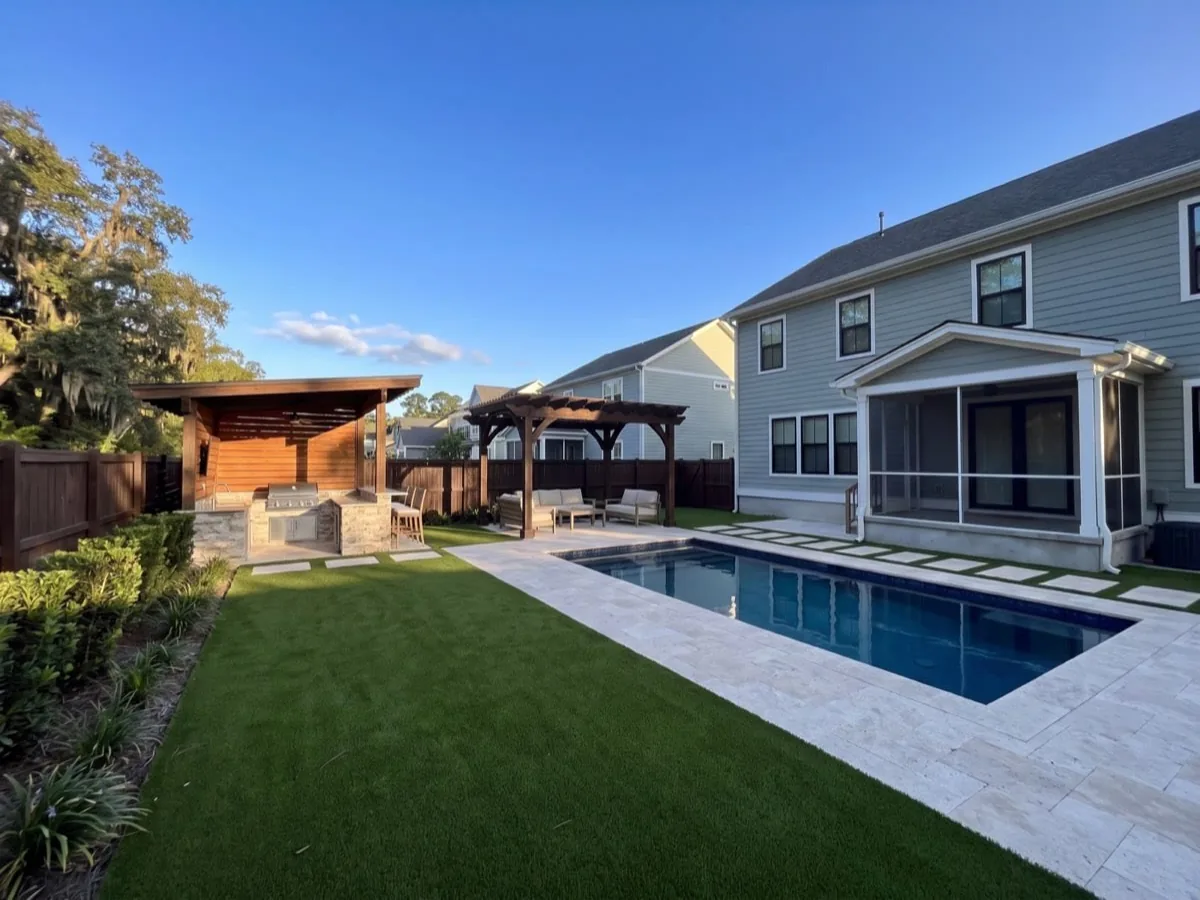
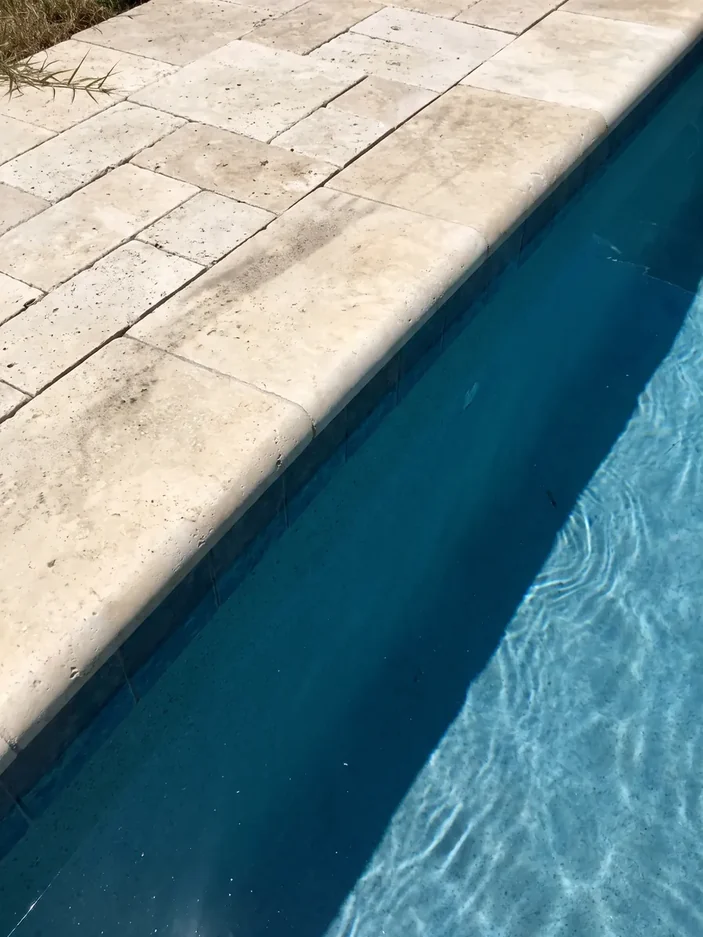 Before
After
Before
After
Water is the whole job here. Summer storms drop a lot of rain fast, and much of the Lowcountry sits on low ground with water close to the surface. Turf laid on graded soil holds that water and floats. That is why every install starts with digging out and a compacted crushed stone base, and why on low lots near the marsh on James Island or Johns Island we work out where the water leaves the yard before we price the turf.
Shade is where turf beats any grass. Under a live oak, St. Augustine is the only grass with a real chance, and it often loses. Turf needs no sun at all, so the bare patch under the canopy in West Ashley or old Mount Pleasant stays green all year. The trade is leaves and acorns, which come off with a leaf blower.
Salt air does not touch it. Close to the water, salt spray burns centipede on James Island, Sullivan's Island and Isle of Palms. There is nothing living in synthetic turf to burn, so a yard that has killed two lawns stays green.
Check the HOA before anything is dug. Plenty of subdivisions in Mount Pleasant and on Daniel Island have rules about what a yard can look like, and some want to approve turf before it goes in. Send us the covenant and we will tell you what the product sheet needs to show.
In open summer sun, yes. Infill takes some of that out and shade takes the rest, so turf under a live oak behaves nothing like turf on an open south-facing lawn. We will tell you which one you have.
Pet turf has a punched backing, so liquid drains through into the stone base instead of sitting in the infill. Rinse it down now and then and it stays fine.
That is what the crushed stone is for. Water goes through the turf, through the fabric, into the base and away. Turf laid with no base is a puddle waiting for August.
Longer than the base under it, which is exactly why we spend the money there rather than on a heavier blade.
Often, with the right underlay and a drainage path. Send a photo of the surface and we will tell you whether it is a candidate before anyone quotes it.
Same product, two names. People searching for artificial grass and people searching for synthetic turf are looking for the thing we install. What matters is not the name but the base underneath it, which is where a cheap job and a lasting one differ.
Better than any real grass. It needs no sun, so the bare ground under a live oak stays green all year. Leaves and acorns land on it the same as anywhere else, and a leaf blower takes them off.
Yes. Most of our customers are in Mount Pleasant and on the islands, where salt spray, shade and HOA rules make real grass hard work. The stone base is the same everywhere. The drainage plan changes with how low the lot sits.
Give us the address and roughly the size of the space. You get a price the same day, with the base work listed separately from the turf.