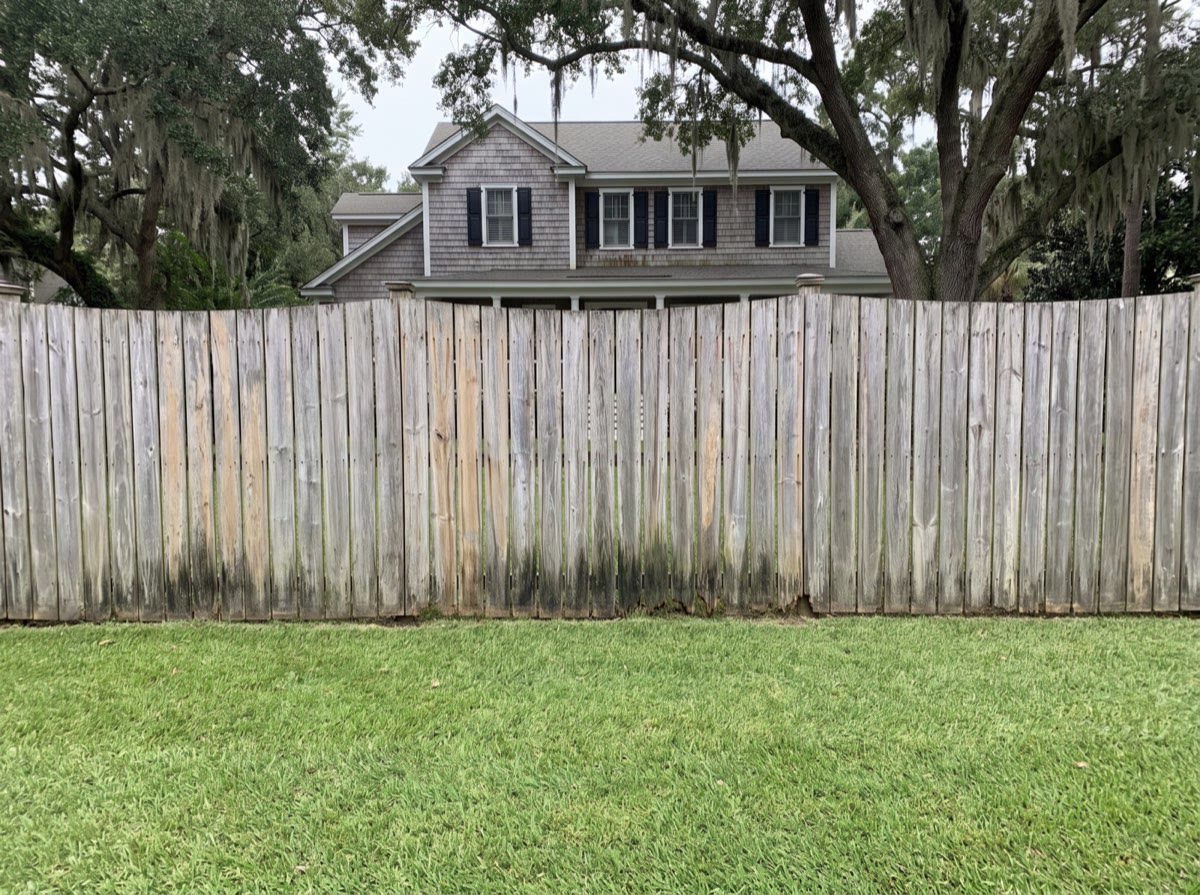
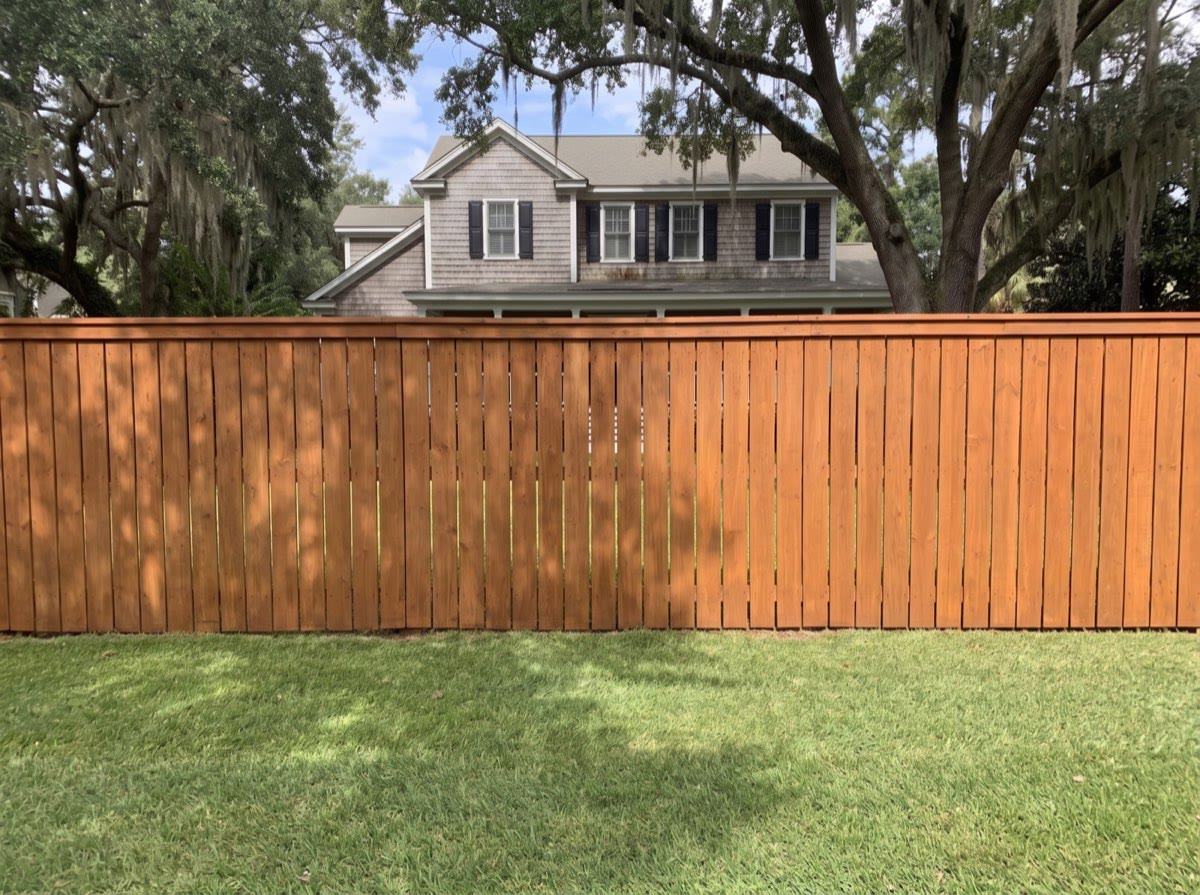
 Before
After

 CarolinaFieldstoneHardscaping & Landscaping
Johns Island is the largest island in the state and most of it still is not a suburb. Lots run to the acre rather than the tenth of one, a good share of the new streets sit on ground that was farmed until recently, and outside the subdivisions the drainage system is a ditch. All three change the job, and none of them show up on a satellite photo.
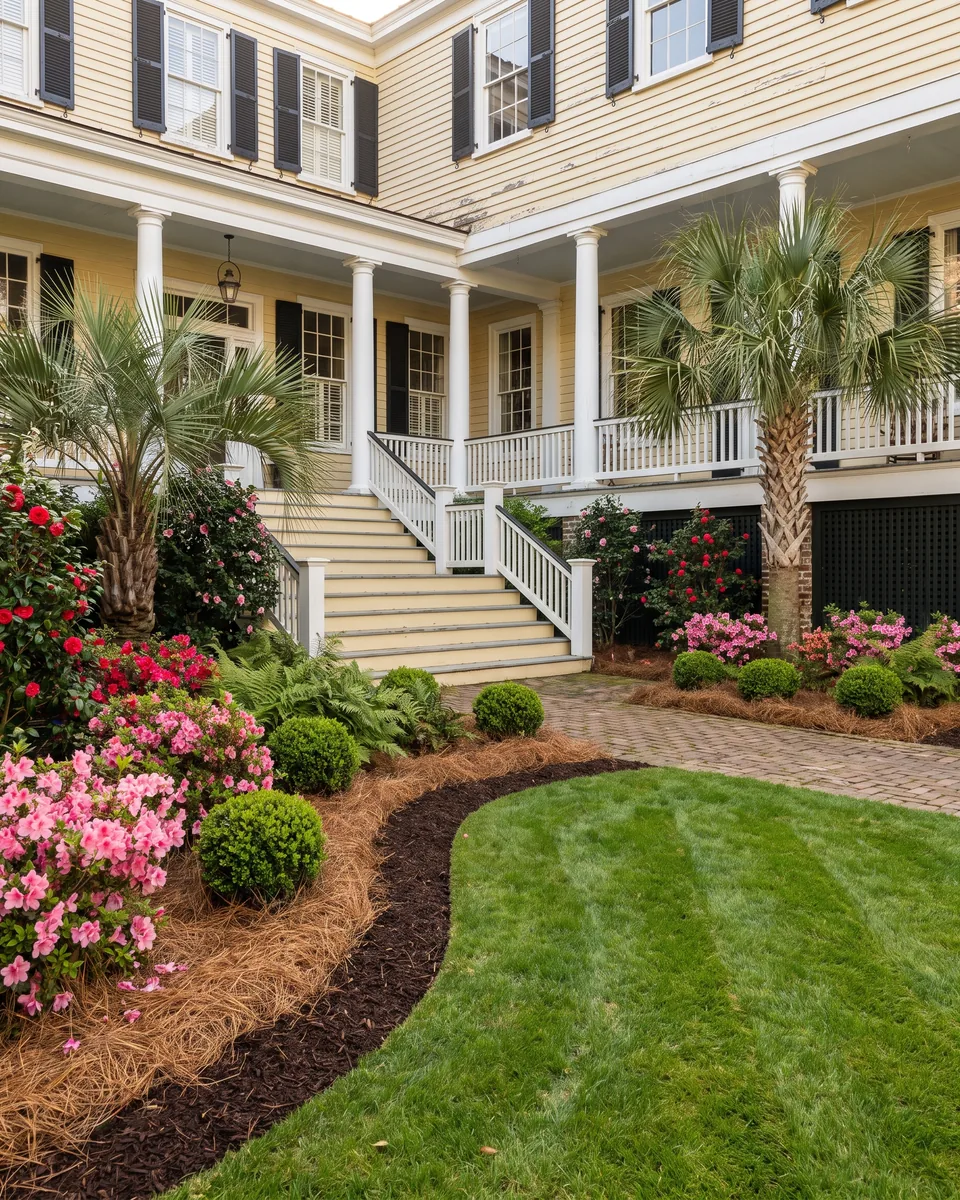
Size changes the work, not just the number. A quarter acre in Park Circle and two acres off River Road are not the same job scaled up. Different machines, a different route through the property, and a different amount of daylight.
Anyone pricing Johns Island acreage off a suburban rate per square foot either loses money on it or quietly stops turning up in August. We price land by what it takes to cut it, and we say which it is before you agree to anything.
Much of the new building here sits on old farm ground. That is a different problem from the imported builder fill you get across the harbour in Mount Pleasant.
This is native soil that was row cropped for generations and driven over by equipment the whole time: a thin worked layer over heavy clay that has been packed hard. It sheds water rather than taking it, and grass on top of it roots shallow and gives up in the first dry spell. It wants breaking up, not feeding.
Off the main roads, the ditch is the storm drain. That is not a figure of speech, it is the whole system, and blocked ditches are the reason large parts of the island stand in water after a hard rain.
A run that has silted in or grown over backs the water up the length of the street and into the low yards first. Clearing the run across the front of your property is real work with a real number on it, and it is worth more to you than most of what gets sold as landscaping here.
The oaks are protected, and the threshold is lower than people expect. Charleston County protects trees of 24 inches diameter at chest height and up, pines and sweet gums excepted, and live oaks are looked at harder still. Grand trees cannot come down without a permit.
Plenty of Johns Island yards have an oak comfortably past that mark. We will not put a saw into one on your say-so, and where a fence line runs through the root plate of one we will move the line rather than the tree.
Part of Johns Island is inside the City of Charleston and part is unincorporated Charleston County. Each writes its own rules, so the first step on any fence, patio or driveway is the county’s GIS map, which shows the jurisdiction for a parcel.
Fences. In the City, a residential fence or free-standing wall outside the historic review districts tops out at six feet, and nothing between three and fifteen feet tall may stand in the vision triangle at a street corner.
In the county, a fence under six feet needs no zoning permit unless it is brick, stone or concrete. A county fence also may not block a natural drainage course or the flow of surface water, which matters on an island of roadside ditches.
Patios and driveways. The county caps impervious surface, meaning anything rain cannot soak through, at 40 percent of the lot in the R-4 and S-3 districts. In the rural and agricultural districts the same cap applies to residential parcels under 30,000 square feet.
The county also requires a zoning permit before grading, filling or surfacing. Inside its urban growth boundary, which crosses Johns Island, that expressly covers more than 120 square feet of new impervious surface, except in the S-3 district. Most patios are bigger than that.
Grand oaks. A tree 24 inches across or more is a grand tree in both jurisdictions. Pines are excluded, and in the county sweet gum too.
The county bars paving, filling, grading and footings closer to the trunk than three times its diameter unless its Board of Zoning Appeals approves, and paving anywhere under the canopy needs county approval. The City asks for at least 12 feet of clearance for impervious surface, plus a foot for every three inches of trunk beyond 24.
Marsh and creek lots. The City’s Johns Island overlay sets buildings 30 feet back from the critical line. In the county, a waterfront lot in the R-4 district has a 35-foot setback and a 15-foot buffer, and in the RR district it is 50 feet and 35. We mark those lines on the plan before we place a patio, a wall or a fence.
Rules checked in October 2026 against: Charleston County zoning ordinance · County guide to finding a parcel’s jurisdiction · City of Charleston zoning code · City tree removal information. Councils and boards change them, so we confirm the current text for your address before quoting.
Before
After
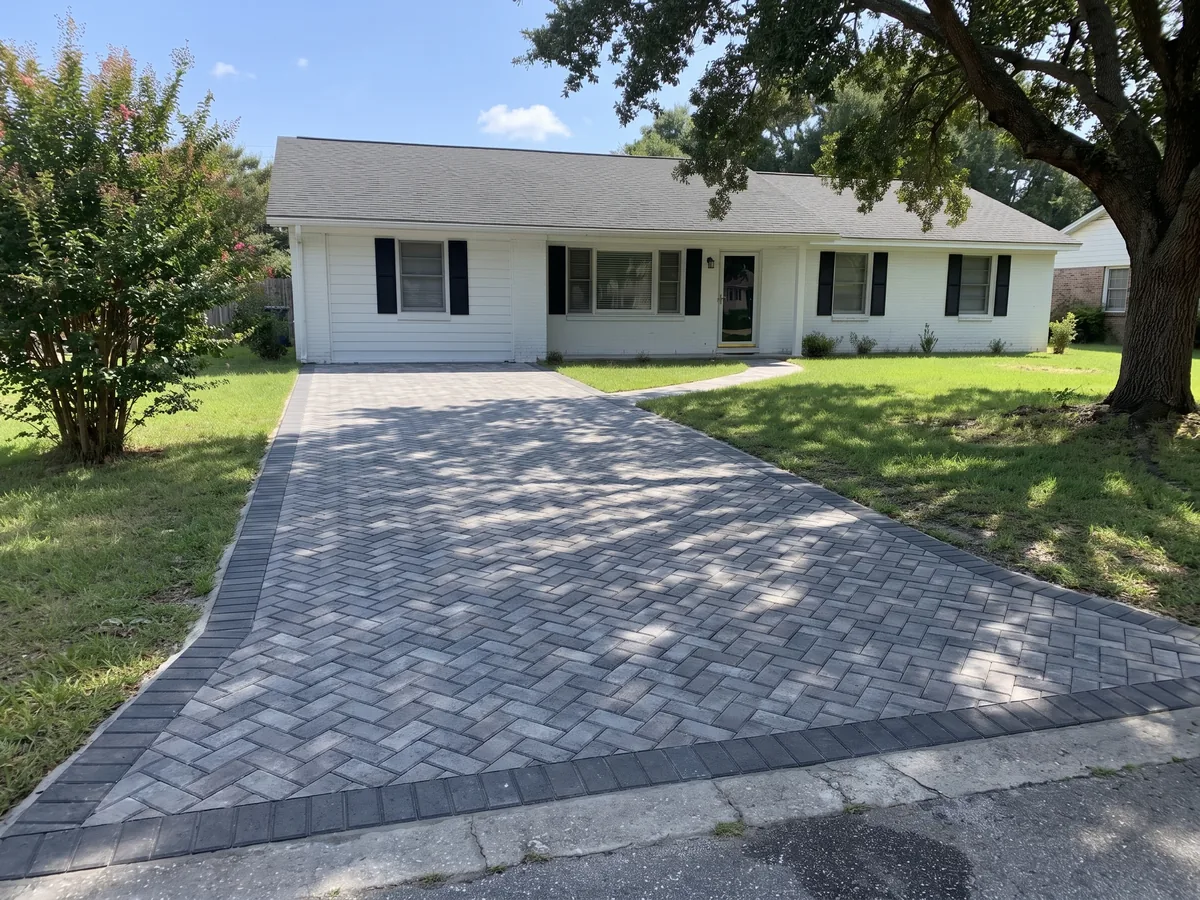
Charleston County’s GIS map shows the jurisdiction for every parcel. If it says anything other than Charleston County, the lot is inside a municipality such as the City of Charleston. We look it up before we quote, because the fence, tree and paving rules are different.
A grand tree is 24 inches across or more. Pines are excluded, and in the county sweet gum too. In the county, paving, filling, grading and footings stay at least three times the trunk’s diameter away from the trunk unless the Board of Zoning Appeals approves otherwise, and paving under the canopy needs county approval.
In the City, impervious surface needs at least 12 feet of clearance, plus a foot for every three inches of trunk beyond 24. We measure the trunk first.
Yes, and it is priced by the time it takes rather than by the square foot, because that is the honest way to quote acreage. Bigger properties also work better on a fixed day, since the drive out here is the part you are really paying for and a settled route makes it cheaper for both of us.
Common, and it is usually the cause rather than a symptom. We clear the run across your frontage and quote it on its own line so you can see what it costs. If the stretch that is actually blocking you is county maintained, we will tell you that instead of charging you to fix someone else's.
Probably not without a permit, and we would rather you did not. Anything 24 inches through at chest height is protected here, and a live oak that size is worth more standing than the lawn it is shading. We will design the beds and the fence line around it, which is cheaper than the permit even when the permit is granted.
You get a real figure the same day, and we will tell you what is driving it. If your property needs more than we quoted, you hear that before anyone starts, not after.
We also work in North Charleston · Mount Pleasant · James Island · West Ashley · Summerville · Daniel Island · Isle of Palms · Sullivan’s Island · Folly Beach · Kiawah Island · Downtown Charleston.